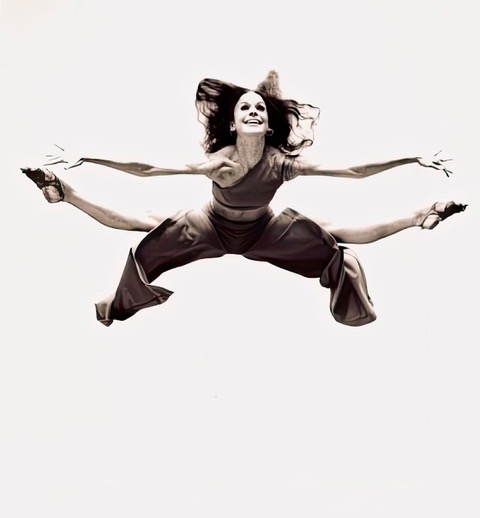
Margot was a student of Anne Rudolph’s who was a prominent dancer in renowned companies such as the Lyric Opera Ballet, The Ruth Page International Ballet, the New York City Ballet, and the Ballet Russe de Monte Carlo. She was featured in the award winning experimental dance movie Static, and was the director of the Eric Braun School of Dance in Highland Park, IL. In 1972, she founded the American Dance Company in Chicago, and her memoir, An American Dance Story, was published in 2020.
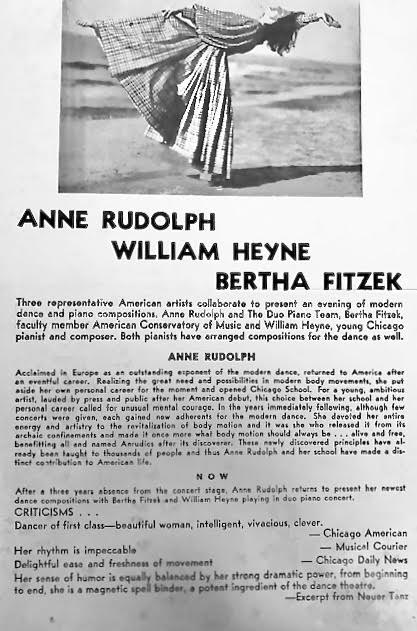
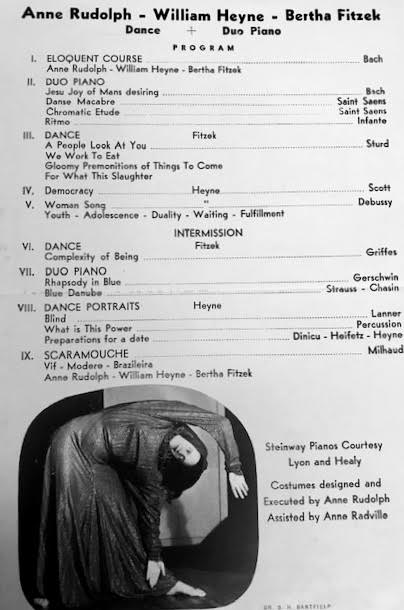
As a toddler, I bounced off walls. My mom searched for a constructive outlet for my enormous energy. She enrolled me in Anne Rudolph’s creative dance class for three-year-olds at her studio on Michigan Avenue. My mom had studied with Miss Rudolph after seeing her perform with her Isadora Duncan inspired Motion Choir at the Chicago World’s Fair, A Century of Progress, in 1934. Later, she danced in Miss Rudolph’s troupe at the Goodman Theatre and designed costumes for her productions.
A formidable presence with stark white hair, piercing blue eyes and zaftig proportions, Anne Rudolph intimidated her young students. They toed the line, except for me. Restless in the class, I rebelled against all structure. I enjoyed improvising. Unleashed, unpredictable and fearless, I came alive. During one improvisation, I entered the janitor’s closet and emerged with a bucket, mop and box of Soilax. I cavorted about with the bucket and mop. For the grand finale of my solo, I opened the box of Soilax and scattered its powdery contents all over the floor in big lyrical swoops while pirouetting. Miss Rudolph scowled. My mom explained, “Margot is being creative.”
Another time, while waiting for my mom to pick me up, I overheard Miss Rudolph lecture a class of adults. “Wearing shoes is harmful to the feet,” she warned. A barefoot modern dancer, she targeted pointe shoes, worn by ballet dancers, and high heels. Motivated by her words, I marched into the dressing room and threw every shoe out the window onto Michigan Avenue. I throughly enjoyed watching them plummet ten stories and hit the pavement. After the class, the barefooted students rode the elevator to the ground floor to retrieve their shoes from the sidewalk. Miss Rudolph told my mom not to bring me back. As my mom and I walked toward the door, Miss Rudolph called out to my mom. “Margot’s future is in ballet. She’s perfect for it. Take her to Gladys Hight when she’s seven.”
My mom followed her spot-on advice. At seven, I began my serious dance training with Gladys Hight at her Loop studio. I became a professional dancer at the Kansas City Starlight Theatre at fourteen, appearing in ten Broadway musicals. I went onto dance with the St. Louis Muny Theatre, Chicago Music Theatre, Lyric Opera Ballet, Ruth Page’s Chicago Opera Ballet and International Ballet and Ballet Russe de Monte Carlo in New York City.
Anne Rudolph made her mark with the physically challenged. She fixed countless broken bodies, helping people to regain and improve their range of movement with her body education techniques. Over many years, she invited my parents and me to her parties. At these events, Miss Rudolph, her protege Teena and I improvised to an eclectic selection of music. We had different personalities and styles. I was the classically-trained virtuoso. Anne excelled in comical and dramatic character studies. Teena was spontaneous, raw, poignant and compelling. We soloed and danced together, telling stories and evoking emotions that ruptured from our souls. Sometimes other guests joined us. I loved those impromptu performances. As a teacher, I always ended my classes by dimming the lights to provide cover for the dancers to express themselves in motion. As a choreographer, my ballets evolved from improvisation. I thank Anne Rudolph for the many opportunities to nurture my creativity.
In 1970, I became director of the Eric Braun School of Dance after the American Ballet Theatre star’s untimely death. On June 3, 1972, I staged a dance concert in Eric’s memory, at Highland Park High School Auditorium. The evening got off to a precarious start. I had set the admission at $2.50. Never again would I have coinage anywhere in the ticket price. A line of people stretched around the block waiting for their 50-cent change. By 7:30 pm over a thousand folks impatiently milled around outside the theatre in 90-degree heat and oppressive humidity. When we opened the doors to the public, a stampede ensued. An elderly man brandished his cane like a sword, swinging it from side-to-side as he walked down the aisle to prevent anyone from getting in front of him. The man was Anne Rudolph’s husband, Dr. Howard Bartfield. He barricaded row 8-center section, while Anne found a pair of suitable seats and threw her shawl over them. As he lumbered down the row to his seat, he knocked over dance critic Ann Barzel’s movie projector, perched on a table.
During the standing ovation at the end of the performance, Eric’s brother Helmut staggered onto the stage in his army uniform, his chest filled with medals and ribbons. When the cheering ebbed, he launched into a sentimental speech, expressing his thanks. Being soused, he had difficulty organizing his thoughts. While slurring his words and swaying from side-to-side, he pulled a handkerchief out of his pocket and blew his nose. Two dancers mercifully escorted him off the stage. A stagehand trotted out with a box of flowers. While he presented them to me, the bottom of the box fell out. Anne Rudolph unexpectedly mounted the stage from the audience, gave me a big hug and curtsied with the cast at the final curtain.
The memorial concert, coupled with the critically-acclaimed premiere a month earlier of my multimedia, rock ballet, In-A-Gadda-Da-Vida, at the Chicago Ballet Guild Showcase, led to the formation of the American Dance Company. Anne Rudolph and Dr. Bartfield became fans. They attended my company’s concerts at the Weinstein Center for Performing Arts in Evanston and at Ravinia in 1973. After a standing-room-only performance of my ballet, Disco Fever, Anne Rudolph told me backstage that she liked the way I blended the precision and airiness of ballet with the earthiness of modern and the theatrical flash of jazz, and enhanced it all witha stage technology. “Your work is original, timely, cool,” she said.
The last time I saw Anne must have been in 1980-81. My parents and I attended a concert of hers at a hall somewhere in Lakeview. She shared the bill with a twenty-something dancer who performed her solo while reclining nude on a revolving circular table. Not to be outdone, Anne ripped off her blouse and danced her piece bare-breasted. She played a Fallen Angel, a Bum Lady, drunk, disheveled and disgusting. She was in her seventies at the time. Her vivid and visceral portrayal is forever seared in my memory. It’s a most fitting parting shot of the incomparable Anne Rudolph.
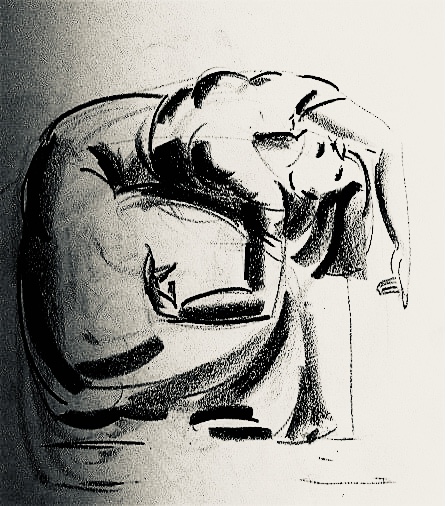


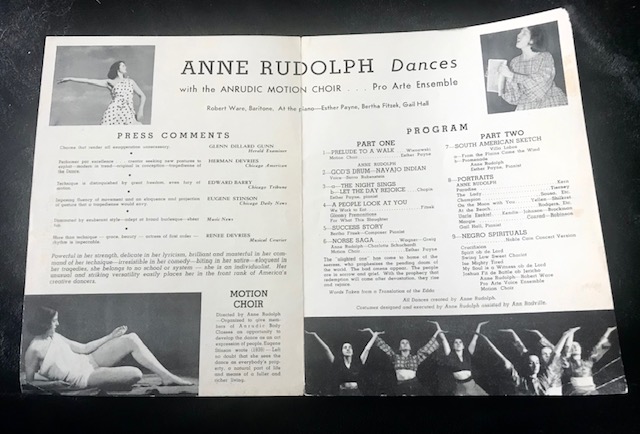
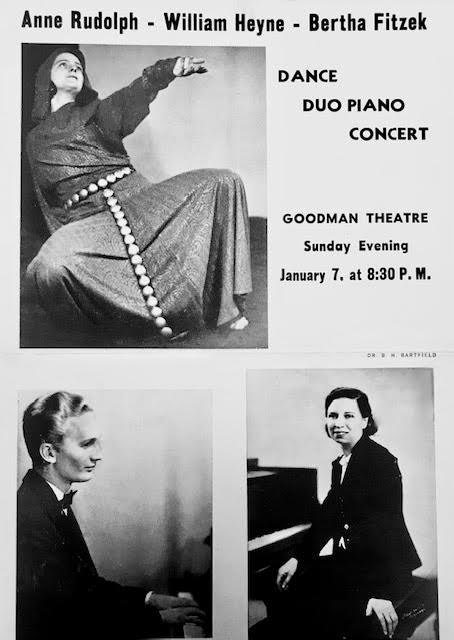

 Anne Rudolph